Friday, 3 April 2015


Thursday, 2 April 2015

Evaluation 3
What kind of media institution might distribute your product
and why?
.jpeg) Examples of major media institutions: Disney, Sony, Times
Warner, ITV, etc. The probability of our media product in which could be
distributed by some of the major institutions is very low, the reason is because
that the chance that this thriller product may make the same amount of profit
as a blockbuster is impossible, as people do not know about this, that they may
be very cautious with a new media company, as it might be received with low
expectations.
Examples of major media institutions: Disney, Sony, Times
Warner, ITV, etc. The probability of our media product in which could be
distributed by some of the major institutions is very low, the reason is because
that the chance that this thriller product may make the same amount of profit
as a blockbuster is impossible, as people do not know about this, that they may
be very cautious with a new media company, as it might be received with low
expectations.


 Indie: Examples are of National Lottery in which help fund
it, especially with the microwave scheme, Film4, With an independent media company, the
probability is pretty high because they may adopt it and then give the
necessary funding and time to make several improvements to it. So companies
like Film4, and BBC, also FilmLondon can help out with a microwave scheme in
which can help with money and a timeline could be able to make and develop it
and for it to become a final product.
Indie: Examples are of National Lottery in which help fund
it, especially with the microwave scheme, Film4, With an independent media company, the
probability is pretty high because they may adopt it and then give the
necessary funding and time to make several improvements to it. So companies
like Film4, and BBC, also FilmLondon can help out with a microwave scheme in
which can help with money and a timeline could be able to make and develop it
and for it to become a final product.

 Once we get a media institution to back us up, the difficult
part is what kind of media distribution would be best advised for our thriller,
so if the worst scenario is that if the institution may think that next to
nobody would see this media product, then it would be released straight to DVD
release, and then we would rely on the sales of the DVD/Blu-Ray and how many
have bought it, another one can be simultaneous release, in which case, both
DVD will be released, and that it will be also released on demand and including
few-several prints will be made and that it could increase the amount of people
taking notice to this. Another way is via a wide release, it could be more
regional or even global, where several to many prints would be released in many
locations around the world. And then there is also a platform release, in which
it will be a small set of prints in which would be sent to a wide area, where
there could be more people seeing this. In a way, a straight to DVD/Blu-Ray
release would be a better reason as because it would cause less issues with
budget as there would be some people who would take a liking for something like
this.
Once we get a media institution to back us up, the difficult
part is what kind of media distribution would be best advised for our thriller,
so if the worst scenario is that if the institution may think that next to
nobody would see this media product, then it would be released straight to DVD
release, and then we would rely on the sales of the DVD/Blu-Ray and how many
have bought it, another one can be simultaneous release, in which case, both
DVD will be released, and that it will be also released on demand and including
few-several prints will be made and that it could increase the amount of people
taking notice to this. Another way is via a wide release, it could be more
regional or even global, where several to many prints would be released in many
locations around the world. And then there is also a platform release, in which
it will be a small set of prints in which would be sent to a wide area, where
there could be more people seeing this. In a way, a straight to DVD/Blu-Ray
release would be a better reason as because it would cause less issues with
budget as there would be some people who would take a liking for something like
this.
Examples of major media institutions: Disney, Sony, Times
Warner, ITV, etc. The probability of our media product in which could be
distributed by some of the major institutions is very low, the reason is because
that the chance that this thriller product may make the same amount of profit
as a blockbuster is impossible, as people do not know about this, that they may
be very cautious with a new media company, as it might be received with low
expectations.
 Indie: Examples are of National Lottery in which help fund
it, especially with the microwave scheme, Film4, With an independent media company, the
probability is pretty high because they may adopt it and then give the
necessary funding and time to make several improvements to it. So companies
like Film4, and BBC, also FilmLondon can help out with a microwave scheme in
which can help with money and a timeline could be able to make and develop it
and for it to become a final product.
Indie: Examples are of National Lottery in which help fund
it, especially with the microwave scheme, Film4, With an independent media company, the
probability is pretty high because they may adopt it and then give the
necessary funding and time to make several improvements to it. So companies
like Film4, and BBC, also FilmLondon can help out with a microwave scheme in
which can help with money and a timeline could be able to make and develop it
and for it to become a final product. Once we get a media institution to back us up, the difficult
part is what kind of media distribution would be best advised for our thriller,
so if the worst scenario is that if the institution may think that next to
nobody would see this media product, then it would be released straight to DVD
release, and then we would rely on the sales of the DVD/Blu-Ray and how many
have bought it, another one can be simultaneous release, in which case, both
DVD will be released, and that it will be also released on demand and including
few-several prints will be made and that it could increase the amount of people
taking notice to this. Another way is via a wide release, it could be more
regional or even global, where several to many prints would be released in many
locations around the world. And then there is also a platform release, in which
it will be a small set of prints in which would be sent to a wide area, where
there could be more people seeing this. In a way, a straight to DVD/Blu-Ray
release would be a better reason as because it would cause less issues with
budget as there would be some people who would take a liking for something like
this.
Once we get a media institution to back us up, the difficult
part is what kind of media distribution would be best advised for our thriller,
so if the worst scenario is that if the institution may think that next to
nobody would see this media product, then it would be released straight to DVD
release, and then we would rely on the sales of the DVD/Blu-Ray and how many
have bought it, another one can be simultaneous release, in which case, both
DVD will be released, and that it will be also released on demand and including
few-several prints will be made and that it could increase the amount of people
taking notice to this. Another way is via a wide release, it could be more
regional or even global, where several to many prints would be released in many
locations around the world. And then there is also a platform release, in which
it will be a small set of prints in which would be sent to a wide area, where
there could be more people seeing this. In a way, a straight to DVD/Blu-Ray
release would be a better reason as because it would cause less issues with
budget as there would be some people who would take a liking for something like
this.
In reality however, the main issue is that our thriller is
not even complete, that we only have 2-ish minutes of a thriller opening, so
there would be little to no chance of anyone backing and distributing our
thriller, so the way how we can promote our thriller is via a few ways, the
first way is to post it onto YouTube, and to use tags in which may help out,
the second is to tell people that we know that we have made it, so that means,
the use of word of mouth to promote our thriller, and also, another way that it
can be promoted is via the use of social media, in which the popular examples
like Facebook and Twitter can be used to rile up some conversation about this.
Evaluation 2
How does your media product represent particular social groups?
For the social groups that we have presented, we have mainly been on about the lower class-styled and upper class group, in which we have tried to make various representations throughout our media product/thriller opening.
 The Lower Class: The lower class people, in which are shown within the thriller are seen as shady, mysterious people, and also, those who deal and supply products/items, which, may be illicit, and in which, may conforms to a stereotype in which the lower class people are often up to no good in which they often do things in which may not often be right at all.
 Upper Class: The way how we have portrayed the upper class people in which, are considered to be a bit more sophisticated, ones in which may be considered to be overseers, to be in charge of the lower class "lackeys", they are ones in which they are the ones who lead people.
Here is the character analysis in which I wiill explain about their character types.
Me(Michal): The way how my character is being shiwn within the opening, is of the lower class person, one in which is the "lackey", someone who works for a person, in this case, I need to retrieve something for the upper class person, the person in which tells me what to do and to report if I got the item or not.
Sam: He is the higher/upper class person, he is essentially, the overseer, and I am the person that he hired me to do work, in this case, he observes and wants to get the job done, in which he would want things done, but does not want to get his own hands dirty, so he hires people who are within the lower class, and that those people would want to get paid.
Joshua: He is more of a mysterious person, his social class is unknown, but can be interpreted as somebody who is within the middle and lower class of people, the reason is because he deals and supplies, instead of narcotics, it is with technology, with the way how he is dressed, he can blend in easily with others.
The way how it is being shown is within the stereotype of the teenagers, as they are wearing hooded clothing, in jeans or tracksuits and all wear trainers. Along with this, there is also the male stereotype, as it is a stereotype that all men do the dirty work, and will do anything to get their reward.
For the social groups that we have presented, we have mainly been on about the lower class-styled and upper class group, in which we have tried to make various representations throughout our media product/thriller opening.
 The Lower Class: The lower class people, in which are shown within the thriller are seen as shady, mysterious people, and also, those who deal and supply products/items, which, may be illicit, and in which, may conforms to a stereotype in which the lower class people are often up to no good in which they often do things in which may not often be right at all.
 Upper Class: The way how we have portrayed the upper class people in which, are considered to be a bit more sophisticated, ones in which may be considered to be overseers, to be in charge of the lower class "lackeys", they are ones in which they are the ones who lead people.
Here is the character analysis in which I wiill explain about their character types.
Me(Michal): The way how my character is being shiwn within the opening, is of the lower class person, one in which is the "lackey", someone who works for a person, in this case, I need to retrieve something for the upper class person, the person in which tells me what to do and to report if I got the item or not.
Sam: He is the higher/upper class person, he is essentially, the overseer, and I am the person that he hired me to do work, in this case, he observes and wants to get the job done, in which he would want things done, but does not want to get his own hands dirty, so he hires people who are within the lower class, and that those people would want to get paid.
Joshua: He is more of a mysterious person, his social class is unknown, but can be interpreted as somebody who is within the middle and lower class of people, the reason is because he deals and supplies, instead of narcotics, it is with technology, with the way how he is dressed, he can blend in easily with others.
The way how it is being shown is within the stereotype of the teenagers, as they are wearing hooded clothing, in jeans or tracksuits and all wear trainers. Along with this, there is also the male stereotype, as it is a stereotype that all men do the dirty work, and will do anything to get their reward.
Evaluation 1
In what way does your media product use, develop or challenge forms and conventions of real media products?
Screening+Audience Feedback
This is essentially two parts in one. Here, Carly Laslett has two female audiences watching our thriller opening and then giving their opinion and feedback on it.
Designing the studio ident
 This is the finished studio ident, in which we have made to represent our group for our thriller opening.
The ways how we have done it is by first, designing it onto paper via the use of a pencil, in which what we have done was to try to find where we put most of the segments to make it look like an effective studio ident, in which once we have sketched it lightly, we have then decided to trace over it via a pencil in which has a higher tone than the HB, to make it stand out more.
Once that was completed, the next step was to place it onto photshop, to make it look digital, in which case, the next step is to scan it, in which it would save a digital copy of the ident, in which the next thing to do is to then place it and then clean up the smudge marks, and then construct it with colour, first by making the lines darker and bolder and then to make it cleaner.
Once that was done, the next thing to do was to save it and then place it onto the thriller opening.
Shooting Schedule
 This is our shooting schedule for our thriller in which we have planned, this is what we were doing for the set days, the scene in which we were doing, and what was the location, the equipment and so on.
Shot List
This is the list of shots in which we have used for our thriller opening, it all ranges from the close up shot, and all the way to a panning shot involved in the thriller opening, in which there is also the explanation behind this.


Wednesday, 1 April 2015
Making the title sequence
To create our thriller opening, we have used various softwares, to create the ident, this was created at first by drawing it onto pen and paper, and then it was modified using Adobe Photoshop, the ident came first for our thriller opening. The next thing in which showed up was the studio name, so it can be seen in a more proper perspective, for the audience in which have not seen the ident and would like the name of the company. Once that it done, the other step is to show who had created it, in this case the director of the film, in which the priority of it is that they always come last!


Storyboard

Titles(examples in the thriller genre)
Titles are used to introduce a film, especially a film within the thriller genre. There are various examples within the thriller genre in which make themselves stand out from the crowd.
The first title sequence is of Se7en, in which had been directed by David Fincher, starring Morgan Freeman, Brad Pitt and Kevin Spacey. The way how the title sequence had been shown is within a chilling and dark atmosphere. The editing in which skewers the shots tries to give it the sense of, mystery with what the person is doing and what are his incentives behind all of this, giving it a sense an enigma that is happening within.
The first title sequence is of Se7en, in which had been directed by David Fincher, starring Morgan Freeman, Brad Pitt and Kevin Spacey. The way how the title sequence had been shown is within a chilling and dark atmosphere. The editing in which skewers the shots tries to give it the sense of, mystery with what the person is doing and what are his incentives behind all of this, giving it a sense an enigma that is happening within.
Animatic.
This is the animatic for our thriller opening, it is taken from the storyboard of our thriller opening, in which case we have done. We have used non-diagetic sounds, the same song from our thriller opening, it is 24 seconds due to the fact that we have used 24 frames for our work, this is from the start to the finish of our thriller.
Editing 1
 Here is the editing that me and my group are doing for our thriller opening, on the left hand sight, we are adding in the ident in which we have created digitally via photoshop, and on the right screen, we are putting our main detail for the blog in which we are doing, along with that, within the bottom, this is where the video is placed and then the noises in which we in some cases muted and some are kept in normally. And then the next thing to do is to add the music to our thriller opening to make it more interesting, and to add some suspense within the work.
Risk Assessment
This is what we have used for our risk assessment in which we have analysed all of the possible issues in which we could be involved, seen the worst case scenario of it, and how did we rate the risk in which we might be in 1=Not risky, in which is a safe scenario, and 10=ABSOLUTE RISKY, DANGER! This is mainly because in the area that we are in, there might be some issues involved within our filming of our thriller opening.

Tuesday, 31 March 2015
First Draft
The first draft was different, comparing to our final thriller. Unfortunately, the first draft of our thriller opening has been deleted and was not uploaded. But the things that we have done for our thriller in which are different from our final was the main item that we have used, instead of making it into a cliche, we have decided to omit the use of the mints, in which we have used as narcotics, and had then replaced it with a cartridge, to change it and to make it more interesting, The other thing was that the walking segment was more longer than the final, in which had made it more of a tedious scene, so in order to make it more appealing, we have shortened it to avoid dragging it out, along with that, when the main character was walking, he was walking towards the jewellery store, in which now, he was walking to the access to a parking, and then had looked around mysteriously.
Monday, 30 March 2015
Treatment

Sunday, 29 March 2015
Costumes and props for thriller opening
For our thriller opening, we have used various clothing and costumes within our thriller opening. The first person that we will be analysing in which will be of the Overseer, or Sam. His clothing made it look modern, but it also is used in less colours, he is seen wearing a small bag in which is of a parody of a very well known portable system known as the Nintendo GameBoy, along with a hoodie, t-shirt and a set of jeans. In which what this gives for the character is a sense of enigma, a mystery shrouds within him, it gives the character a more mature perspective on him.


 There were only a couple props in which we have used, and those were of a phone within the last few segments in which the Overseer/Sam had used to reply within the text, and the other major prop is of the tech/device in which I have obtained, in which what this was of a cartridge of a video game system, the Nintendo 3DS, within the thriller, they are the mystery behind all of this, as the person would wonder what is the main objective behind all of it is and for what use is those devices within the thriller.
 The last person is me, the collector. I am seen with the fur parka coat, and a set of jeans, with trainers, the clothing is seen within a more of a friendlier appearance in which is the main reason as to why the person is on the ground level, instead of the rooftops and lower level. However, the facial hair present, gives it more of an aggressive jawline/face, giving the person the perspective that they are not originally from the location, in which may also give it the perspective that the person is from another country doing an illegal operation conjoining of more than one country.


The next person is of the dealer, or Joshua. He is seen wearing sneakers/trainers, in which he is seen wearing a hoodie, a jacket and a set of black trousers. This gives him a more of a sinister perspective within this character, he looks more of a character that is not to be messed with, someone who is looking a bit more younger for his age.
There were only a couple props in which we have used, and those were of a phone within the last few segments in which the Overseer/Sam had used to reply within the text, and the other major prop is of the tech/device in which I have obtained, in which what this was of a cartridge of a video game system, the Nintendo 3DS, within the thriller, they are the mystery behind all of this, as the person would wonder what is the main objective behind all of it is and for what use is those devices within the thriller.The last person is me, the collector. I am seen with the fur parka coat, and a set of jeans, with trainers, the clothing is seen within a more of a friendlier appearance in which is the main reason as to why the person is on the ground level, instead of the rooftops and lower level. However, the facial hair present, gives it more of an aggressive jawline/face, giving the person the perspective that they are not originally from the location, in which may also give it the perspective that the person is from another country doing an illegal operation conjoining of more than one country.Thursday, 26 March 2015
Initial Ideas

Thursday, 19 March 2015
Studio Idents
Studio idents are ways to introduce the film and the company that have made this. Over the course of time, they have evolved into brand new versions of the old intros, and then it have then stuck and had been a major part of the movies, any type and any director.
 One example of a ident is of the 20th Century Fox. It is an animated ident, in which it have started with the top view, and then it goes down towards the front, along with the lighting showing as if it is a very important event, in which case, the important event is the movie itself. The examples of films showing the ident from the company are films like the 'Aliens' trilogy and the 'X-men' series.
 Paramount Pictures is also involved in the big six producers of films, they were created in 1912, the mountain with the stars is one that many people know of. This prouction company are known to delve in different films, along with different genres, an example of a film in this producer is the known 'North by Northwest', which has been created by Alfred Hitchcock, a legendary director in the thriller genre of films.


Warner Brothers are also one of the most notable producers, with the crest being present with the initials of WB, The company was founded within 1923, their most notable films were of The Hobbit trilogy the Dark Knight trilogy, American Sniper and Man of Steel. They create films in varying genres, more in the superhero genre with Superman and Batman.
 Universal Studios is also another very known one, and one of the more notable studio idents, it starts of with the Earth, and then the Universal title starts to move towards the centre, aligning itself in the middle. Similar to Paramount, this production company was created in 1912, the most examples of their works are of E.T, Jurassic Park and Jaws.
Walt Disney Pictures is also another very known producer created in 1928, the ident shows the castle in full view, and then goes minimalist and presents the outline of it. They have done notable films such as The Lone Ranger, Pirates of the Carribean and Alice in Wonderland(2010).
One example of a ident is of the 20th Century Fox. It is an animated ident, in which it have started with the top view, and then it goes down towards the front, along with the lighting showing as if it is a very important event, in which case, the important event is the movie itself. The examples of films showing the ident from the company are films like the 'Aliens' trilogy and the 'X-men' series.Paramount Pictures is also involved in the big six producers of films, they were created in 1912, the mountain with the stars is one that many people know of. This prouction company are known to delve in different films, along with different genres, an example of a film in this producer is the known 'North by Northwest', which has been created by Alfred Hitchcock, a legendary director in the thriller genre of films.Warner Brothers are also one of the most notable producers, with the crest being present with the initials of WB, The company was founded within 1923, their most notable films were of The Hobbit trilogy the Dark Knight trilogy, American Sniper and Man of Steel. They create films in varying genres, more in the superhero genre with Superman and Batman.
Universal Studios is also another very known one, and one of the more notable studio idents, it starts of with the Earth, and then the Universal title starts to move towards the centre, aligning itself in the middle. Similar to Paramount, this production company was created in 1912, the most examples of their works are of E.T, Jurassic Park and Jaws.Walt Disney Pictures is also another very known producer created in 1928, the ident shows the castle in full view, and then goes minimalist and presents the outline of it. They have done notable films such as The Lone Ranger, Pirates of the Carribean and Alice in Wonderland(2010).
Location
For our thriller opening, we had to decide where we had to film for this, so while we were on our 2nd production meeting, so the location/area that we have thought of was the City of London/Central London. The reason why is to give some form of interesting setting, it would give more of a tense atmosphere, contrasting to the generic and basic streets of Barking and Dagenham, which would make the thriller look bland and very uninteresting.
 So we then had condensed the locations as to where we will film this thriller, so we decided to find a location in which we would film at a high level, so that we can be able to see the skyline of London, in which we have found one location to do so, the One New Change. This is a shopping mall/centre within the heart of London, this was very close to the St. Paul's Cathedral in St. Paul's, in which there was a roof terrace available for the public to go to, so we managed to record on the rooftop region.

Once the rooftop recording was done the next process was to go to an alleyway, so we found a near path, in which it was not fully an alleyway, but also a parkway area, in which the next segment in the middle of the thriller opening had been recorded within Gutter Lane, The reason why we have filmed here is because to give it a more secluded feel when the deal had happened within the thriller opening, instead of showing it in the public.
So we then had condensed the locations as to where we will film this thriller, so we decided to find a location in which we would film at a high level, so that we can be able to see the skyline of London, in which we have found one location to do so, the One New Change. This is a shopping mall/centre within the heart of London, this was very close to the St. Paul's Cathedral in St. Paul's, in which there was a roof terrace available for the public to go to, so we managed to record on the rooftop region.Once the rooftop recording was done the next process was to go to an alleyway, so we found a near path, in which it was not fully an alleyway, but also a parkway area, in which the next segment in the middle of the thriller opening had been recorded within Gutter Lane, The reason why we have filmed here is because to give it a more secluded feel when the deal had happened within the thriller opening, instead of showing it in the public.
Styles of editing
There are various styles of editing incorporated to create some form of effect being shown, especially in the thriller genre.
Montage Theory: Russian filmmaker and film theorist Lev Kuleshov, created a theory, that a film is similar to a house, the shots represent the bricks, so each shot was the brick for the house, so in the end, the once all the shots(bricks) were done, that would make the film(house). Montages especially were different images/films combined together.
Fade: The fade cuts as the image/video darkens and/or brightens, for most cases throughout the film, it is use to convey a passing of time, in which is a common thing to use.
Continuity Edit: This edit tries to make it into a chronological order, even if it is a flash back, it will still make sure that the time is moving forwards, and not any other way.
Graphic Match: A match-cut or raccord is an effect in which there are two separate items, in two different regions, where those two shots of those, graphically match.
Match-on action: The said character starts an action, such as a fight sequence, and then we see this segment to the end.
Wipe: This transition is basically when one segment of the film clip, gets shifted in any direction, this is the transition in which gets recognised quicker by the audience, the most common wipe in which is conveyed is when it is wiped to the right, because it links to the fact that time is being passed.
Eye line match: What this does is essentially move the camera from the character to what the character is seeing.
Jump cut: The reason why the transition is often use is because it grabs the audience's attention, it is quick and sudden, not slow and predictable, it essentially breaks the continuity editing, the reason why it feels like it is because it looks like something from that scene was removed from it.
Straight/Normal Cut: The last and most common cut is the straight cut, it the editing in which is the most common out of all of them, it is used to retain reality within the film, they are slow, however, these edits does not distract the audience, it does not obscure the audience's attention.
The reason as to why I have done a blog on this is because I have now gotten used to the camera work, and had practiced editing within our couple of films that we have created, and I wanted to learn more examples of the various types of editing and how are they used in films, especially within the thriller genre.
Montage Theory: Russian filmmaker and film theorist Lev Kuleshov, created a theory, that a film is similar to a house, the shots represent the bricks, so each shot was the brick for the house, so in the end, the once all the shots(bricks) were done, that would make the film(house). Montages especially were different images/films combined together.
Fade: The fade cuts as the image/video darkens and/or brightens, for most cases throughout the film, it is use to convey a passing of time, in which is a common thing to use.
Continuity Edit: This edit tries to make it into a chronological order, even if it is a flash back, it will still make sure that the time is moving forwards, and not any other way.
Graphic Match: A match-cut or raccord is an effect in which there are two separate items, in two different regions, where those two shots of those, graphically match.
Match-on action: The said character starts an action, such as a fight sequence, and then we see this segment to the end.
Wipe: This transition is basically when one segment of the film clip, gets shifted in any direction, this is the transition in which gets recognised quicker by the audience, the most common wipe in which is conveyed is when it is wiped to the right, because it links to the fact that time is being passed.
Eye line match: What this does is essentially move the camera from the character to what the character is seeing.
Jump cut: The reason why the transition is often use is because it grabs the audience's attention, it is quick and sudden, not slow and predictable, it essentially breaks the continuity editing, the reason why it feels like it is because it looks like something from that scene was removed from it.
Straight/Normal Cut: The last and most common cut is the straight cut, it the editing in which is the most common out of all of them, it is used to retain reality within the film, they are slow, however, these edits does not distract the audience, it does not obscure the audience's attention.
The reason as to why I have done a blog on this is because I have now gotten used to the camera work, and had practiced editing within our couple of films that we have created, and I wanted to learn more examples of the various types of editing and how are they used in films, especially within the thriller genre.
3rd Production Meeting

Studio Ident

Sound Test
This is the sound test, in which we have tried to attempt a serious sound test, but eventually, led into a comedic approach into the sound test, this was our first attempt at using the camera and boom in a serious production way. For this, the boom was fitted with the dead animal/cat, the reason as to why that has been mounted/fitted onto the microphone is because to avoid the wind being picked up within the filming of this sound test, we have used diagetic and non-diagetic, sound coming from the film like dialogue and nature and not coming from the film like music and sound effects that we have done. This film is to also show how we have improved with our quality with filming, in which we have used the tripod, to try to give stability to the filming, this immediately improved our quality of the filming, it had given more stability and made the filming look better.
First day of Filming
 For our first day of filming, we have made some progress. We went to Central London, at around the St. Paul's area, approximately the City of London borough. We have filmed at the top/ the rooftops of the One New Change, a shopping centre within the area, in which what we have done was film the starting segment of the thriller, and the panning shot of the skyline of London, in which the progress was good, as we had it finished in a quick timing, and had to re shoot the skyline because we wanted to try to make it interesting.
Once we have finished with the rooftop segment of the thriller opening, we have then decided to film below, on the ground of the One New Change, as the next segment was of me going towards the alleyway on a higher long shot, the street that we were filming on was Gutter Lane, and in this picutre on the top, there is Carly and Sam filming us, and in order to get the communication for what I had to do, they decided to call me and then give me the directions, the reason as to why they call me on my phone is because it is a more civilised way to communicate the instructions, instead of shouting towards me.

Preliminary Evaluation
For the preliminary task, what we have tried to do is to prepare ourselves for the thriller opening by using what we have learned throughout the filming and editing phase of this preliminary task, overall, we have found many things in which we have done well and the segments in which needed some form of improvements throughout this. As stated in the previous preliminary blog, we have done the preliminary in two halves, the first half was on the main preliminary, the main segment, whereas the second half of it, was more of an outtake/blooper reel of the preliminary task, in which we have shown our blunders and some mistakes that we have done either because we were out of focus, forgot something, and tried to do something else, in which had failed miserably.
Positives
The editing involved was alright, the cross-fading involved within the beginning segment of the preliminary shows a sense of time passing, as the main person waits impatiently for the other character, the setting shot in which the clock is being presented is a interesting starting point, as instead of starting it in a cliched way with a person, we have tried to vary it.
Negatives
Where the problems arise from the piece of work is the acting, it can be described as awkward, quirky, the delivery of each of the dialogue had some form of emotion, instead of containing none, however, it could've had some more depth to it, one of the segments near the end, had a very awkward perspective/look onto it, in which I had looked at the camera near the very end, in which for some, may not be noticeable, however, it can be seen as distracting and can put off some people and make it very off-putting. The music near the end had a it of an awkward transition throughout the work, as near the end to try to create a heightened tension, it feels cheap, and unnecessary to do so.
Overall
In the end, it is the starting point to the process of creating that final thriller opening, in which while it is awkward and unusual, it shows how the process of the work had started and will reach in the end towards the serious two minutes of those thriller openings.
Positives
The editing involved was alright, the cross-fading involved within the beginning segment of the preliminary shows a sense of time passing, as the main person waits impatiently for the other character, the setting shot in which the clock is being presented is a interesting starting point, as instead of starting it in a cliched way with a person, we have tried to vary it.
Negatives
Where the problems arise from the piece of work is the acting, it can be described as awkward, quirky, the delivery of each of the dialogue had some form of emotion, instead of containing none, however, it could've had some more depth to it, one of the segments near the end, had a very awkward perspective/look onto it, in which I had looked at the camera near the very end, in which for some, may not be noticeable, however, it can be seen as distracting and can put off some people and make it very off-putting. The music near the end had a it of an awkward transition throughout the work, as near the end to try to create a heightened tension, it feels cheap, and unnecessary to do so.
Overall
In the end, it is the starting point to the process of creating that final thriller opening, in which while it is awkward and unusual, it shows how the process of the work had started and will reach in the end towards the serious two minutes of those thriller openings.
Preliminary
This is the preliminary task that we have done before the Thriller Opening, the reason why we have done it is because to prepare ourselves for the thriller opening in which we have done. The reason why this is 3 minutes long is because most of the first half is shown as the actual preliminary, whereas the remaining length of time is shown with bloopers/outtakes to present our mistakes and a few errors throughout the time that we were recording the preliminary.
Monday, 16 March 2015
Movie Theorists
There are various theorists involved within the film industry in which have created various theories, these theorists are: Barthes with the Enigma code, the Binary Opposition by Levi Strauss, the 3 Act of the Traditional Hollywood Structure, Todorov's Narrative Theory with the 5 stages and Propp's Character Types.
The first thing within the Hollywood Structure was very basic and traditional. It is mainly three parts/acts. The first segment is 25% of the movie in which is the set up of the movie, it is the primary premise of it, it sets up the characters, the story and some things in which are extremely crucial to the main story segment. It is strictly a linear plot, there is very often little to no sub plots involved within the main story. The main thing that is involved within the main story, is that there is often closure within these type of stories.
The next thing involved is Roland Barthes' Enigma Code, it is essentially the mystery within the story being connoted within it, there is the open code in which the story has no resolution within the end of the story, while closed is the opposite, the story has a resolution. Films or television shows such as Eastenders, do not have a resolution entirely, it would still develop over time.
The next theorist is of Levi Strauss, in which shows the Binary Opposites, via dominant and subordinate. The main examples are with the hero and villain, male and female. The main example can be of Good and Evil, in which in the popular example within the trilogy is of the Star Wars, in which Luke Skywalker is in the good side, or the Jedi, whereas Darth Vader(Anakin Skywalker) is in the bad side, or the Sith, Batman and Bane/Joker/Two Face.
The next theorist is of Todorov and his Theory on Narrative, there are essentially 5 stages to it, the first stage is of the equilibrium, as how it has started, then the next stage is the disruption of the equilibrium in which has been triggered by an event, then they recognise that the disruption has happened, there is then an attempt at repairing this disruption, and the final stage of it is the reconstruction or repair of the equilibrium. A very notable example of this is of the Die Hard, the 1988 action film staring Bruce Willis, the first stage is of John McClaine, with his wife, going to the Nakatomi Plaza on Christmas Eve for a party, the next stage is of the disruption of the party created by the terrorist, Hans Gruber, the police and John realise that everyone is kept hostage by Gruber and his terrorist group, in which the next stage is for John to become the one man army and to stop everyone including Gruber, in which he does, and the equilibrium has been restored.
Vladimir Propp's theory is of the various character types involved, in which he had incorporated and analysed teaditional folk stories and had found 8 different character roles in which are key to the story. The hero, villain, helper, donor(provider), father, dispatcher, the princess and the false hero, in which some of these characters can be in more than one role. Examples: Hero= Tony Stark(Iron Man), Villain=General Zod(Man of Steel), Helper=Short Round(Indiana Jones and The Temple of Doom), etc.
The other theory is of Laura Mulvey's Male Gaze, the theory is of the fact that women are seen as erotic pleasure, the women are passive and men are active in the movie, women do not move the plot forward, the cinema reflects patriarchal society. Films like Rope portray the olden times in which
The first thing within the Hollywood Structure was very basic and traditional. It is mainly three parts/acts. The first segment is 25% of the movie in which is the set up of the movie, it is the primary premise of it, it sets up the characters, the story and some things in which are extremely crucial to the main story segment. It is strictly a linear plot, there is very often little to no sub plots involved within the main story. The main thing that is involved within the main story, is that there is often closure within these type of stories.
The next thing involved is Roland Barthes' Enigma Code, it is essentially the mystery within the story being connoted within it, there is the open code in which the story has no resolution within the end of the story, while closed is the opposite, the story has a resolution. Films or television shows such as Eastenders, do not have a resolution entirely, it would still develop over time.
The next theorist is of Levi Strauss, in which shows the Binary Opposites, via dominant and subordinate. The main examples are with the hero and villain, male and female. The main example can be of Good and Evil, in which in the popular example within the trilogy is of the Star Wars, in which Luke Skywalker is in the good side, or the Jedi, whereas Darth Vader(Anakin Skywalker) is in the bad side, or the Sith, Batman and Bane/Joker/Two Face.
The next theorist is of Todorov and his Theory on Narrative, there are essentially 5 stages to it, the first stage is of the equilibrium, as how it has started, then the next stage is the disruption of the equilibrium in which has been triggered by an event, then they recognise that the disruption has happened, there is then an attempt at repairing this disruption, and the final stage of it is the reconstruction or repair of the equilibrium. A very notable example of this is of the Die Hard, the 1988 action film staring Bruce Willis, the first stage is of John McClaine, with his wife, going to the Nakatomi Plaza on Christmas Eve for a party, the next stage is of the disruption of the party created by the terrorist, Hans Gruber, the police and John realise that everyone is kept hostage by Gruber and his terrorist group, in which the next stage is for John to become the one man army and to stop everyone including Gruber, in which he does, and the equilibrium has been restored.
Vladimir Propp's theory is of the various character types involved, in which he had incorporated and analysed teaditional folk stories and had found 8 different character roles in which are key to the story. The hero, villain, helper, donor(provider), father, dispatcher, the princess and the false hero, in which some of these characters can be in more than one role. Examples: Hero= Tony Stark(Iron Man), Villain=General Zod(Man of Steel), Helper=Short Round(Indiana Jones and The Temple of Doom), etc.
The other theory is of Laura Mulvey's Male Gaze, the theory is of the fact that women are seen as erotic pleasure, the women are passive and men are active in the movie, women do not move the plot forward, the cinema reflects patriarchal society. Films like Rope portray the olden times in which
Monday, 9 February 2015
Mise-en-Scene
What is 'Mise-en-Scene'
The term mise-en-scene is French for "In the scene or frame". The main 5 segments/elements in which are the essentials of mise-en-scene is:
1. Settings and props
2. Costume, hair and make-up
3. Facial expressions and body language
4. Lighting and colour
5. Positioning of characters and objects in the frame.
Example of a colour movie: (Voyage à travers l'impossible: Invraisemblable équipée d'un groupe de savants de la Société de Géographie incohérente; pièce fantastique nouvelle en 40 tableaux) or in English, The Impossible Voyage is a film created by Georges Melies, it was created in 1904, and the way how colour was conveyed or put into the movie, was by hand painting them, bit by bit, there was no colour being shown in the cameras that they have used within the film, they were always black and white, so in order to create the film in colour, they would've had to paint every single frame, in which case, the modern film is often shot at 24 FPS(Frames Per Second), whereas some special films such as The Hobbit is filmed at a smooth 48 FPS(Frames Per Second).
Settings is the where the story will be set within, whether it will be set in an older time or in a modern period, whether it is et in a castle, or in a full city. It creates a sense of atmosphere and mood that gives it the dynamic edge. For example, horror films give a sense of dark and dreary places, films such as 1986's Aliens, the empty corridors of the U.S.S Sulaco gives it the dark atmosphere, because while you do expect the xenomorph to be there, but you do not know when it will hit the crew members and Ripley. It also makes it so that we know that it is set in the future.
Lighting gives a strong representation of movies, if there is a dark lighting, then it would develop a tense atmosphere, if it is in a lighter area, then there would be little to no tension involved, it also gives the depth of field a bigger perspective, along with the shadows. The brighter light gives it a lower sense of shadows, musicals are the prime examples of them.
Costumes are a main segment as well. It can show a significance as to who are the characters, what they do, and where they are within the movie, and to make it more immersive, for example, if the movie is set within a Wall Street-styled financial market, you would see people in smart styled clothing, if it is a extravagant party.
To help out with the costumes, the location is also the important segment because it helps to set up the premise behind the story and what it is, similar to the previous two examples, the Wall Street-styled story would be set within a region in which is a financial market, e.g. Wall Street, London Stock Exchange, whereas if t set within an extravagant party, it would be set within a grand hall. These are used to further immerse as well.
The term mise-en-scene is French for "In the scene or frame". The main 5 segments/elements in which are the essentials of mise-en-scene is:
1. Settings and props
2. Costume, hair and make-up
3. Facial expressions and body language
4. Lighting and colour
5. Positioning of characters and objects in the frame.
Example of a colour movie: (Voyage à travers l'impossible: Invraisemblable équipée d'un groupe de savants de la Société de Géographie incohérente; pièce fantastique nouvelle en 40 tableaux) or in English, The Impossible Voyage is a film created by Georges Melies, it was created in 1904, and the way how colour was conveyed or put into the movie, was by hand painting them, bit by bit, there was no colour being shown in the cameras that they have used within the film, they were always black and white, so in order to create the film in colour, they would've had to paint every single frame, in which case, the modern film is often shot at 24 FPS(Frames Per Second), whereas some special films such as The Hobbit is filmed at a smooth 48 FPS(Frames Per Second).
Settings is the where the story will be set within, whether it will be set in an older time or in a modern period, whether it is et in a castle, or in a full city. It creates a sense of atmosphere and mood that gives it the dynamic edge. For example, horror films give a sense of dark and dreary places, films such as 1986's Aliens, the empty corridors of the U.S.S Sulaco gives it the dark atmosphere, because while you do expect the xenomorph to be there, but you do not know when it will hit the crew members and Ripley. It also makes it so that we know that it is set in the future.
Lighting gives a strong representation of movies, if there is a dark lighting, then it would develop a tense atmosphere, if it is in a lighter area, then there would be little to no tension involved, it also gives the depth of field a bigger perspective, along with the shadows. The brighter light gives it a lower sense of shadows, musicals are the prime examples of them.
Costumes are a main segment as well. It can show a significance as to who are the characters, what they do, and where they are within the movie, and to make it more immersive, for example, if the movie is set within a Wall Street-styled financial market, you would see people in smart styled clothing, if it is a extravagant party.
To help out with the costumes, the location is also the important segment because it helps to set up the premise behind the story and what it is, similar to the previous two examples, the Wall Street-styled story would be set within a region in which is a financial market, e.g. Wall Street, London Stock Exchange, whereas if t set within an extravagant party, it would be set within a grand hall. These are used to further immerse as well.
Tuesday, 27 January 2015
Psycho
.jpg)
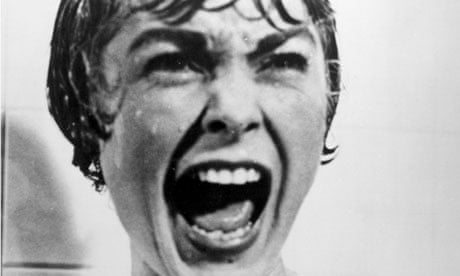
The way how the Macguffin within the movie is portrayed is essentially the money within the envelope, the $40,000 and the phone booth, these are normally ignored at first, just fully left out as they may not be important at first, but then within the near finale/climax of the movie, it will reappear.
Along with the Macguffin, the definitive part of the movie is of course of the murder scene, as the main character eventually becomes murdered in the very infamous shower segment, this was one of the reason that the film had gartered some controversy, as this has not really been seen or developed normally, and that they would've required Hitchcock to redo or to remove the segment entirely, which he had said that he had removed it, but instead of abiding to them, he had still kept it and they did not fully realise.
The murder scene which had some forms of the murder scene had led to Paramount wanting this to be removed, however Hitchcock had stated that nobody had seen the actual stabbing, the fast cutting of the scene gives the illusion that we are seeing the stabbing of the main character, but not exactly showing it.
The suspense that the film had given was very crucial, it gave the feeling that the murderer may eventually strike again, but it could happen at any time, any place, stresses the apprehension, there is less and less violence than everyone seems to think. To avoid making the characters more cliche than they are normally, by deciding to make them flawed, with giving them mistakes and flaws within their own personality. The major elements of the movie however, were of shower murder scene and the final segment of the mother. What happen with the mother was her fate in which had been left over, which was the fact that she was dead, and that the murderer was disguised as her mother all along, and that he was covering up the fact that she was dead the whole time.
The thriller is more of a villain driven plot, in which the antagonist has confused the main protagonist and the people who were planning to stop him and to put him behind bars, however, he tries to up them by putting himself as a disguise as his own mother.

 The legacy that the film had left was shocking, as because of its new conventions of the thriller genre, had allowed it to create 3 sequels, in which however, started out as positive with the Psycho II, and then the acclaim dropped to mixed reviews with Psycho IV: The Beginning. There was also a 1998 remake of the film, however, it received negative reception as it had done nothing new to the remake, as it instead, done a shot-to-shot remake.
 Excluding the many sequels and the remake, it had also caused a cultural impact, as because of the murder scene and the conventions that it had used, it had easily become one of the most recognisable film, and it was considered to be Hitchcock's best movie, especially with the murder scene being one of the most notable scenes in movie history, the reason as to why is because of the Soviet montage style, in which had made it look like an actual murder has happened.
Subscribe to:
Posts (Atom)